
Top 12 Best Web Frameworks for Startups Migrating From No-Code in 2026
You've validated your MVP on Bubble, Webflow, or Airtable, but now you're hitting a wall. Limited performance, brittle Zapier integrations, and spiraling operational costs are stifling growth. The clear next step is migrating to a real code-based solution, but the sheer number of options is overwhelming. This guide demystifies the landscape of the best web frameworks specifically for founders making this critical transition from no-code to production.
We cut through the noise to provide a practical, actionable analysis. Our goal is to help you select a scalable, secure, and defensible tech stack that investors will value and your future engineering team can build upon. This isn't a generic list; we examine each framework through the precise lens of a no-code-to-code migration, focusing on what truly matters: speed of development, scalability, talent availability, and long-term viability.
For each framework, you will find a detailed breakdown covering:
- Quick Facts: Core language, ecosystem maturity, and first-party PostgreSQL support.
- Pros & Cons: An honest assessment tailored for teams leaving no-code platforms.
- Scalability & Performance: Notes on handling growth beyond Airtable's limits.
- Hosting & Deployment: Common patterns to get your application live.
- Use-Cases & Recommendations: A clear matrix to help you decide which stack-React, Next.js, Django, or another top contender-is right for your product.
We provide the direct insights non-technical founders and product leaders need to make an informed decision, ensuring your next platform is built for sustainable success. Each entry includes direct links and reference materials to help you dive deeper.
1. React
React isn't a traditional web framework, but a JavaScript library for building component-based user interfaces. Its official website, react.dev, is the canonical starting point and the number one resource for any team adopting it. For founders migrating from visual builders like Bubble or Webflow, this site provides the foundational knowledge needed to understand how modern, scalable frontends are constructed. The content is maintained by the core team, ensuring every tutorial and API reference is accurate and reflects production-ready patterns.
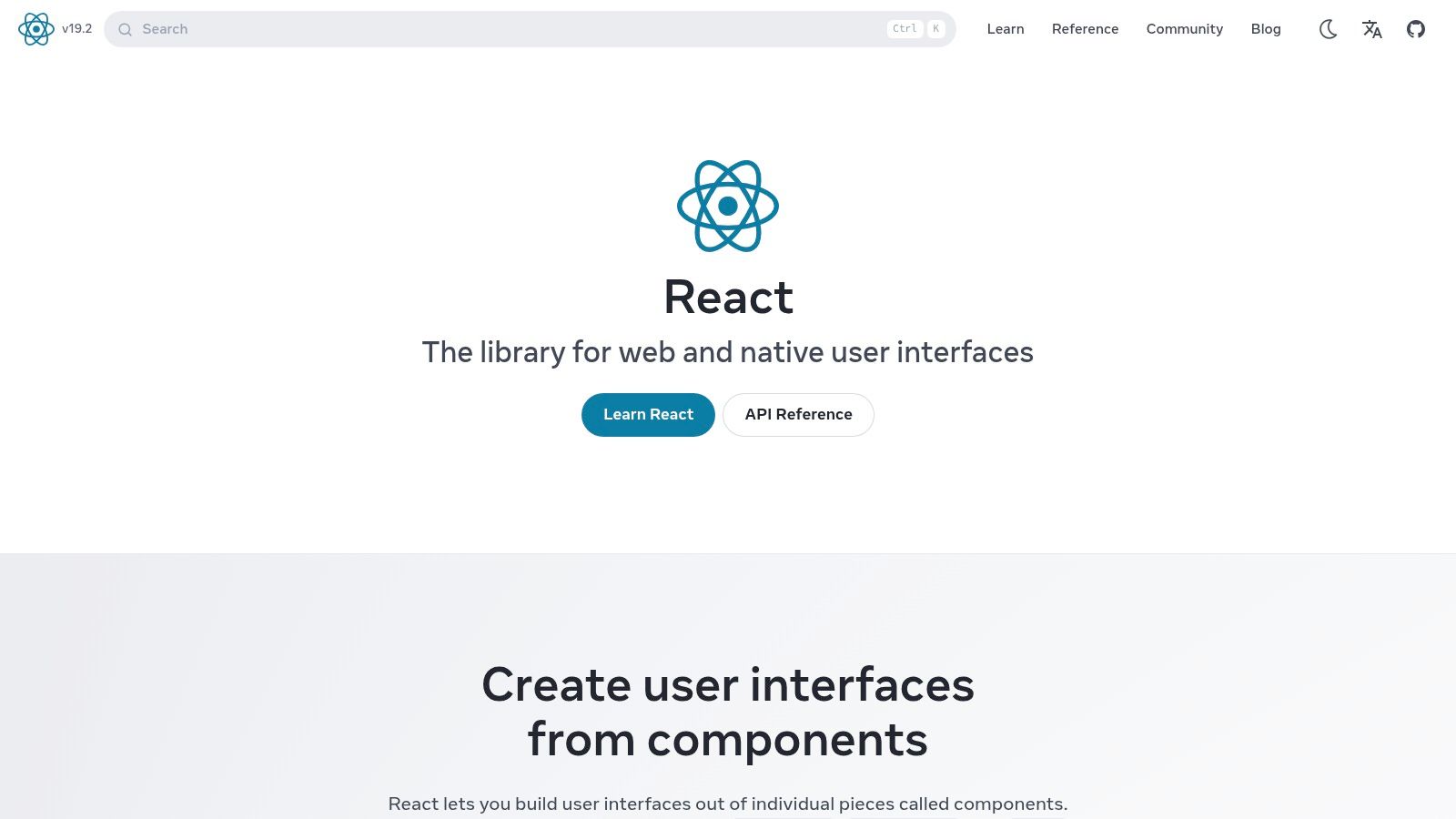
The site’s guided tutorials are invaluable for learning core concepts like state, props, and hooks. It excels by not just teaching React in isolation; it guides users on how to integrate it into full-stack applications using frameworks like Next.js, which is a common and powerful path for no-code migrations. This makes it one of the best web frameworks resources available.
Navigating React for Your Migration
A key challenge for founders is that React only handles the "view" layer. The documentation acknowledges this directly, offering clear advice on choosing complementary tools for routing and data management, which is critical when you're used to an all-in-one no-code platform.
Key Features & Insights:
- Hands-on Examples: The docs are filled with interactive sandboxes, allowing you to edit and see code changes live in the browser.
- Production Guidance: It provides essential patterns for server rendering and data fetching, crucial for performance and SEO.
- Stable Ecosystem: The site emphasizes a stable, clear upgrade path, giving confidence to teams building long-term products.
The primary "con" is that its depth can be overwhelming. To use it effectively, focus first on the "Learn React" section and then explore the "Start a New React Project" guide to see how it fits into a complete framework. This approach bridges the gap between no-code simplicity and production-grade engineering.
Website: https://react.dev/
2. Next.js
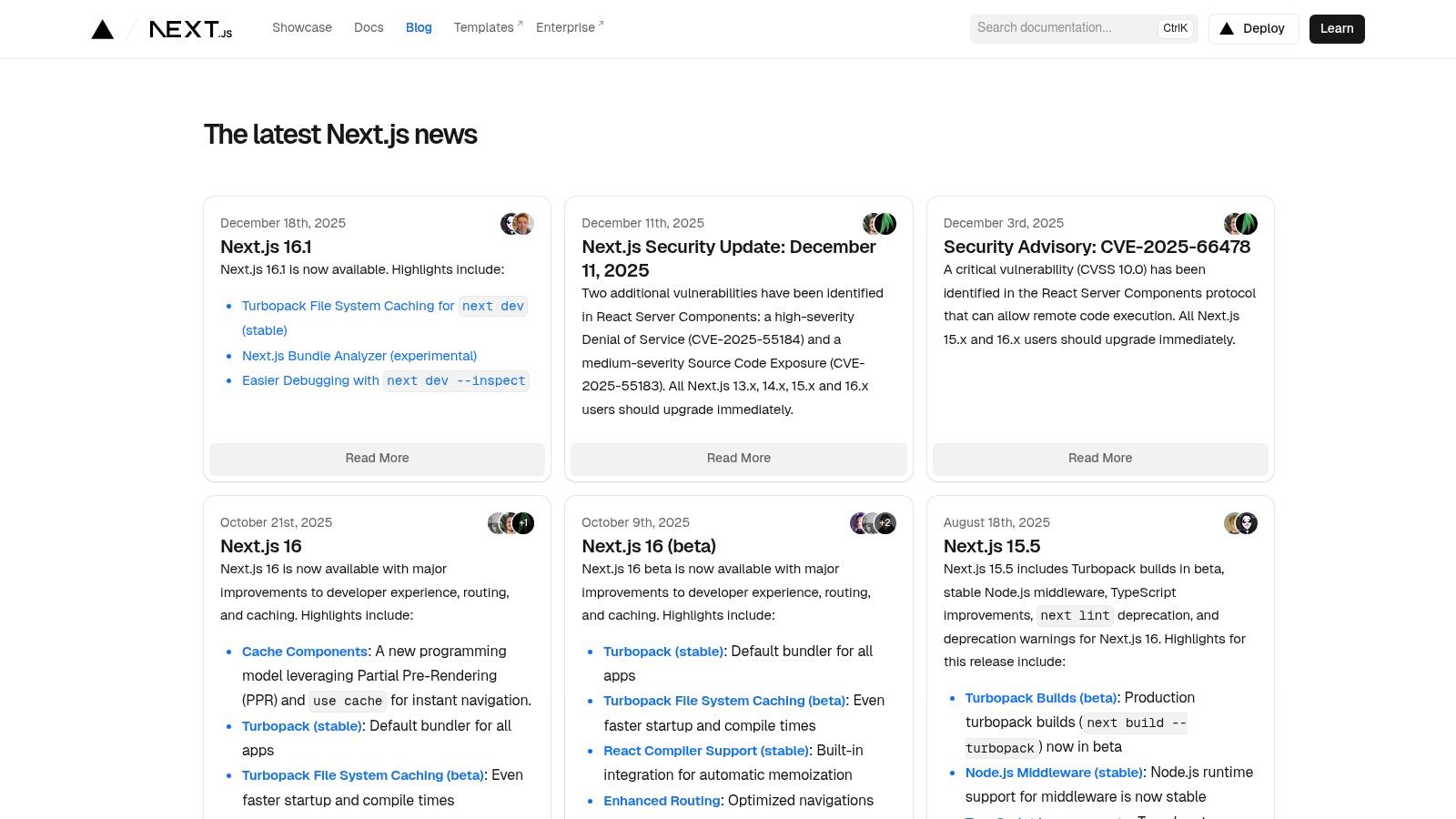
Next.js is the production-ready React framework that takes the library's UI capabilities and adds the critical backend features needed for a complete application. Its official website, nextjs.org, serves as the definitive resource, offering everything from interactive tutorials to in-depth guides on its advanced features. For founders moving beyond the limits of no-code, this site is the bridge to building enterprise-grade, performant web applications with one of the best web frameworks available.
The documentation excels at explaining complex topics like Server-Side Rendering (SSR), Static Site Generation (SSG), and API Routes in a digestible way. It provides clear, copy-pasteable examples and production-ready templates that dramatically accelerate development. This "batteries-included" approach is perfect for teams who need a robust structure without having to piece together dozens of disparate tools, a common pain point when scaling.
Navigating Next.js for Your Migration
The key advantage of Next.js is its full-stack nature; it handles routing, data fetching, and rendering out of the box, which feels familiar to those coming from integrated no-code platforms. The "Docs" section is your primary starting point, explaining core concepts like file-system routing and server components.
Key Features & Insights:
- Production Patterns: The site details advanced caching, Partial Prerendering (PPR), and performance optimization strategies.
- Integrated Backend: Learn to build API routes directly within your Next.js project, simplifying your architecture.
- Fast Development: Guides on the Turbopack bundler show how to achieve near-instantaneous development server startup times.
The main "con" is that its rapid release cycle requires teams to stay updated to leverage the latest features and security patches. To manage this, focus on the "Blog" and release notes sections to understand changes between versions. This proactive approach is essential for building scalable web applications that last.
Website: https://nextjs.org/
3. Angular
Angular is a comprehensive, "batteries-included" web framework maintained by Google. Its official website, angular.dev, is the central hub for its opinionated, integrated ecosystem. For founders accustomed to the all-in-one nature of no-code platforms, this site provides a structured and complete path to building enterprise-grade applications with first-party tooling for everything from state management to routing. The content is meticulously organized, making it a definitive resource for understanding one of the best web frameworks for large-scale projects.
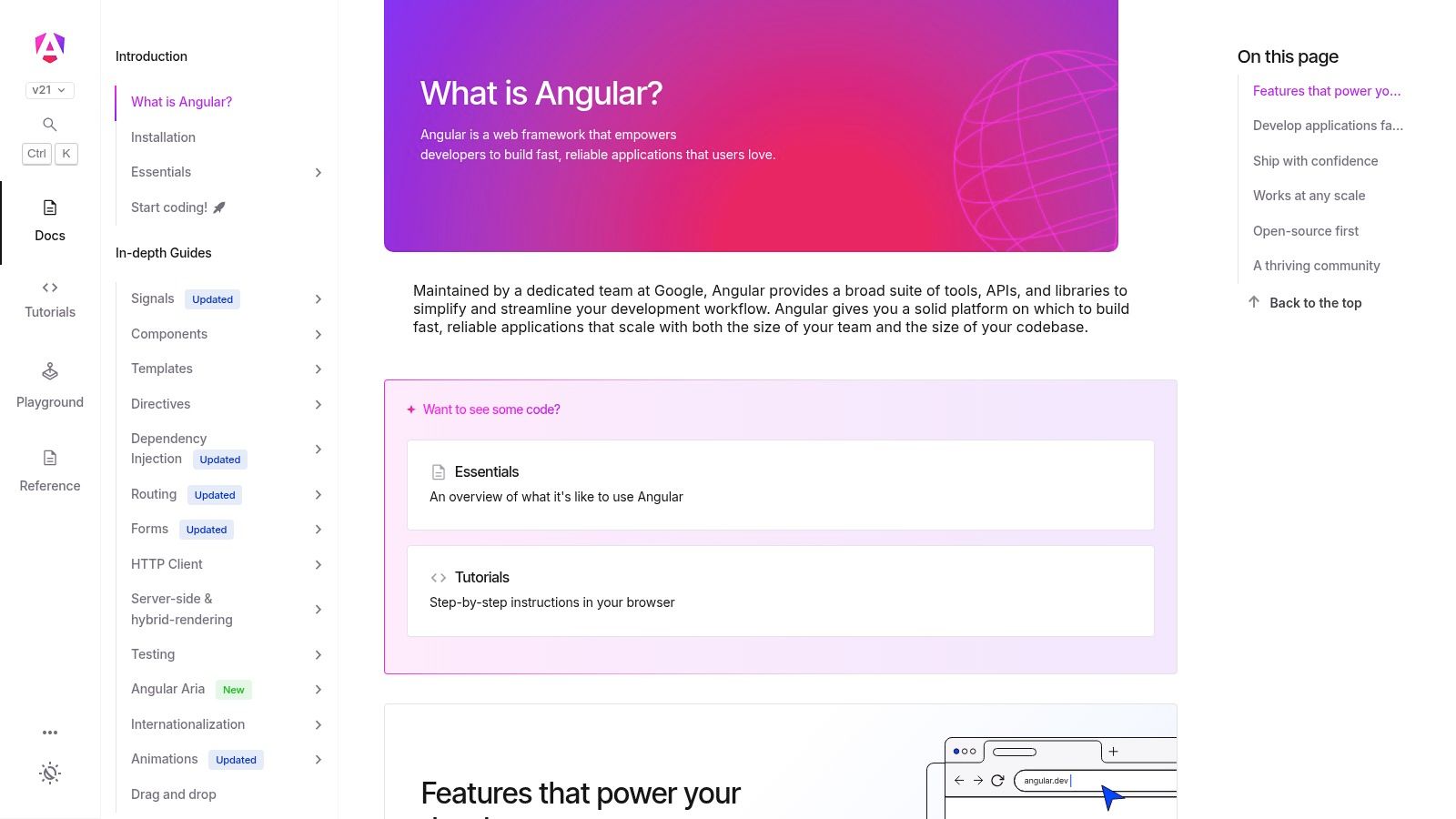
The site’s tutorials and in-depth guides cover core concepts like its component architecture, dependency injection, and the modern Signals reactivity model. It excels at providing a complete picture, demonstrating how to leverage its powerful Command Line Interface (CLI) for scaffolding, building, and deploying applications. This holistic approach is especially useful for teams that want a single, cohesive toolset without the need to assemble a stack from disparate libraries.
Navigating Angular for Your Migration
A key advantage for migrating teams is Angular’s prescriptive nature, which reduces decision fatigue. The documentation provides clear, structured patterns for building scalable applications, a stark contrast to more flexible libraries. The "Playground" and "Tutorials" sections are the best starting points for hands-on learning.
Key Features & Insights:
- Integrated Tooling: The site details the powerful CLI, which handles project creation, code generation, and guided updates with schematics.
- Enterprise-Ready Patterns: It offers first-party solutions for server-side rendering (SSR), internationalization (i18n), and advanced routing.
- Long-Term Support: The documentation emphasizes stability, with clear versioning and detailed migration guides for long-term project viability.
The primary "con" is that its opinionated structure introduces a steeper learning curve compared to more minimalist frameworks. Major version changes can also require dedicated migration efforts, though the provided tooling helps significantly. For founders who value an integrated, stable, and scalable platform managed by a major tech company, angular.dev is an indispensable resource.
Website: https://angular.dev/overview
4. Vue.js
Vue.js positions itself as "The Progressive JavaScript Framework," and its official website, vuejs.org, perfectly embodies this philosophy. For founders coming from no-code, the site offers an approachable entry point into modern web development. It aggregates everything needed to get started, from core documentation to curated community resources, making it one of the best web frameworks for teams that value a gentle learning curve without sacrificing power.
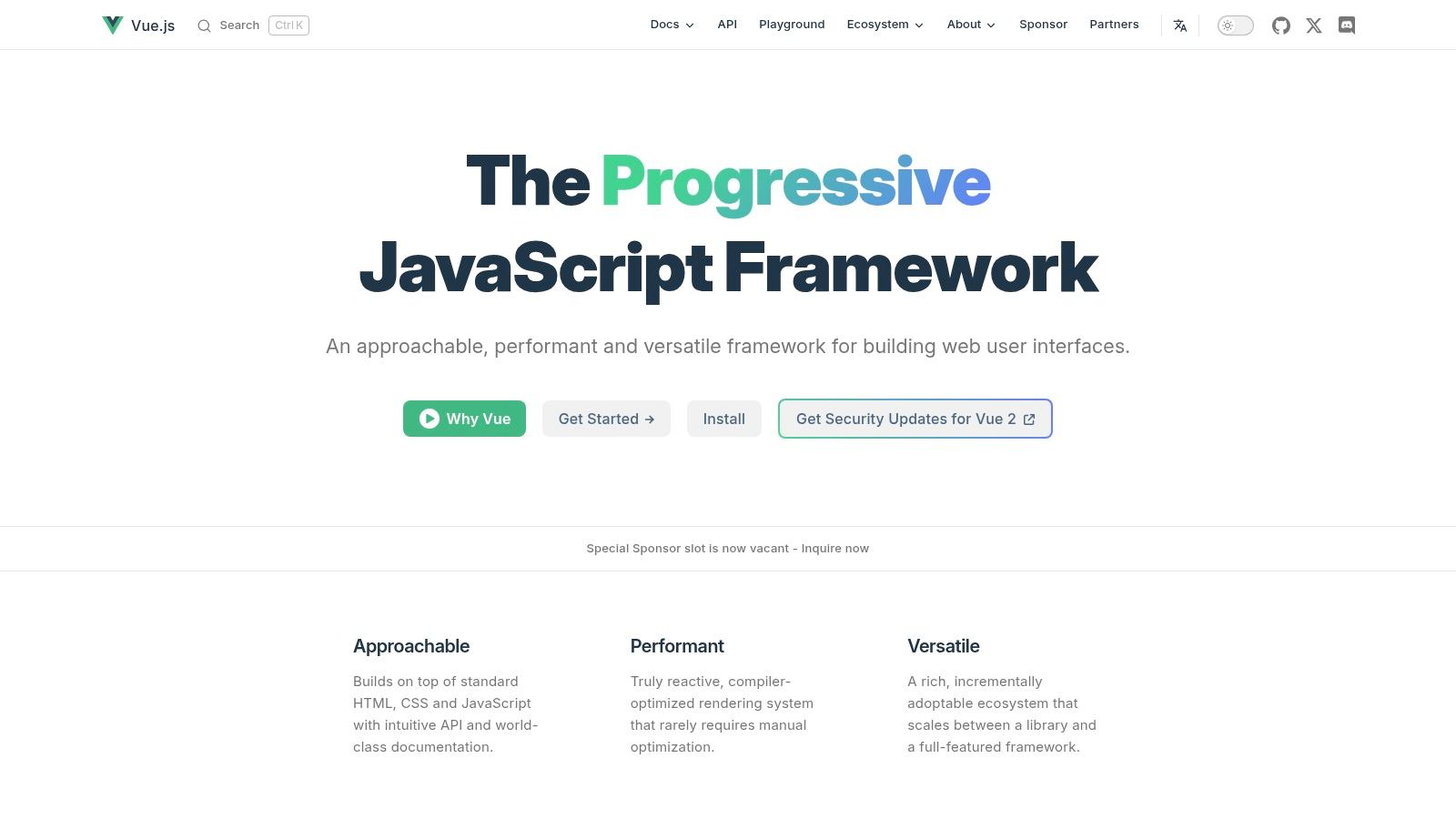
The site’s documentation is its standout feature, renowned for clarity and organization. It guides users through incrementally adopting Vue, from dropping it into an existing site to building a full-scale Single-Page Application (SPA). This flexibility is a significant advantage for startups migrating features piece by piece, as it avoids the need for an all-or-nothing rewrite.
Navigating Vue.js for Your Migration
A key benefit for no-code founders is Vue’s clear separation of concerns, which often feels more intuitive than other component-based models. The official documentation directly links to core ecosystem libraries like Vue Router for navigation and Pinia for state management, providing a cohesive, well-supported toolkit that mirrors the integrated nature of platforms like Bubble.
Key Features & Insights:
- Gentle Learning Curve: The documentation and API design are exceptionally beginner-friendly, reducing initial development friction.
- Official Ecosystem: The site centralizes official tools for routing and state management, ensuring they work together seamlessly.
- Flexible Adoption: Guides explain how to use Vue as a lightweight library or a full-featured framework, supporting various migration strategies.
The primary "con" is that Vue's enterprise footprint can be smaller than React's in some regions, which may affect talent acquisition. To start, use the "Get Started" guide and follow the tutorial. This path clearly demonstrates Vue's core principles and how its official libraries combine to build a complete, production-ready application.
Website: https://vuejs.org/
5. Svelte / SvelteKit
Svelte approaches web development differently by moving work from the browser to a compile step, resulting in highly optimized, vanilla JavaScript. Its official website, svelte.dev, is a masterclass in developer education, featuring an interactive tutorial that lets you learn by doing, right in your browser. For founders accustomed to the direct manipulation of no-code tools, this hands-on playground provides an intuitive bridge to understanding how reactive, component-based UIs are built from code.
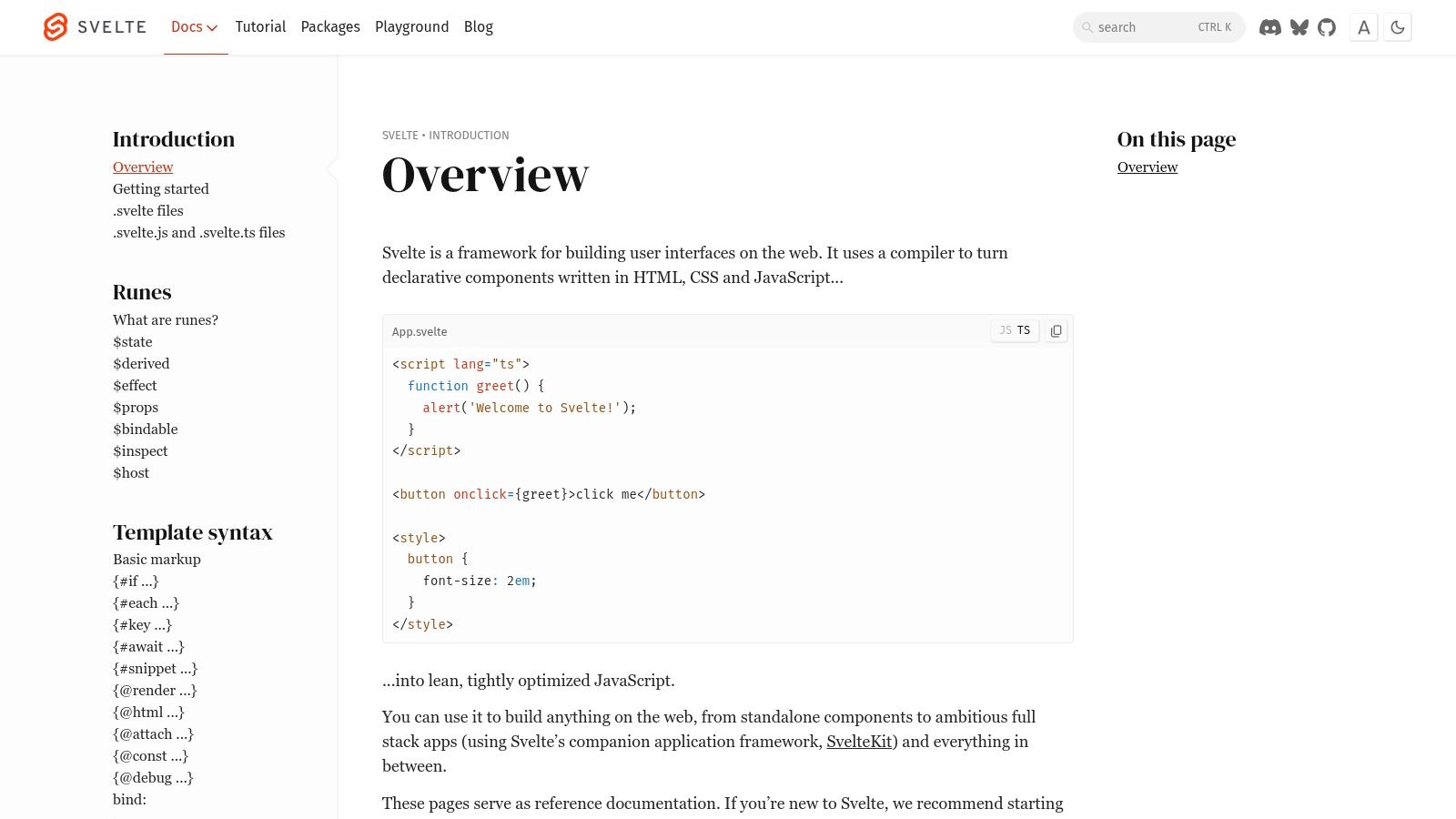
The site immediately introduces SvelteKit, the official full-stack framework built on Svelte, making it a complete resource for building entire applications. The documentation is exceptionally clear, covering everything from routing and data loading to form actions. This comprehensive approach positions SvelteKit as one of the best web frameworks for teams that want exceptional performance without the complexity of a large runtime library.
Navigating Svelte for Your Migration
The key advantage of Svelte is its minimal boilerplate and "write less code" philosophy, which can feel liberating for teams moving from visual editors. The website's documentation directly addresses full-stack patterns with SvelteKit, so you won't need to hunt for third-party solutions for basic needs like routing or server-side rendering, a common hurdle when migrating.
Key Features & Insights:
- Interactive Tutorial: The site’s standout feature is a built-in tutorial where you can write and run Svelte code directly, making the learning curve much smoother.
- Compile-Time Reactivity: Svelte compiles your code to tiny, performant JavaScript, resulting in faster load times and a snappier user experience.
- Integrated Tooling: The documentation provides clear guidance on using SvelteKit for full-stack development, including server endpoints and layouts.
The primary "con" is its smaller ecosystem compared to React or Vue, meaning fewer third-party libraries and pre-built components. To get started, complete the interactive tutorial first, then follow the SvelteKit docs to build a new project. This path ensures you learn the core concepts before tackling a full application.
Website: https://svelte.dev/docs/svelte
6. Django
Django is a high-level Python web framework that encourages rapid development and clean, pragmatic design. Its official website, djangoproject.com, is the definitive resource for founders needing a “batteries-included” solution. For those accustomed to the integrated nature of Bubble, Django provides a similarly cohesive experience, but with the power and scalability of a production-grade backend. The documentation is maintained by the Django Software Foundation, ensuring it’s reliable, up-to-date, and aligned with best practices.
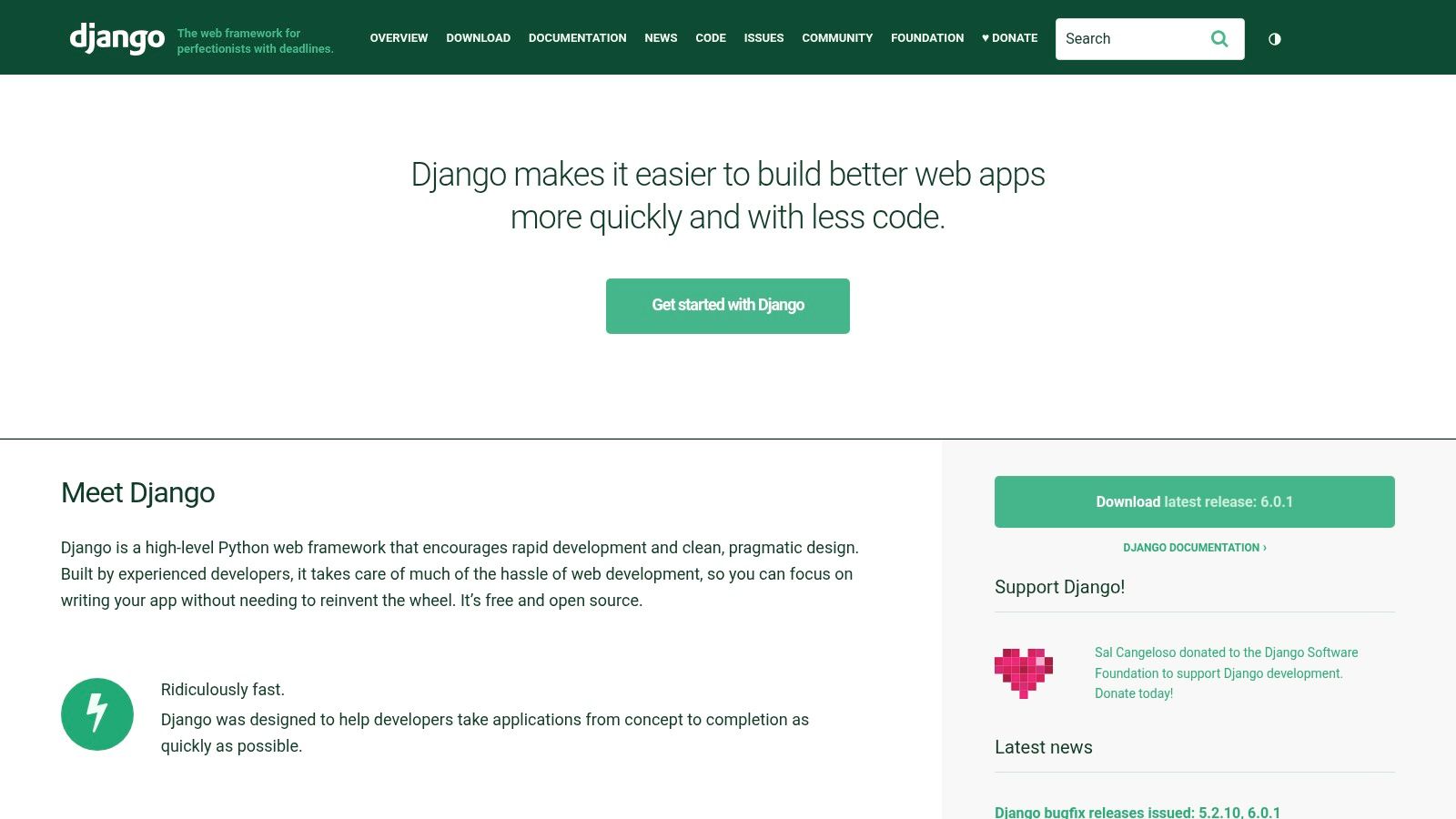
The site's step-by-step tutorials are excellent for understanding Django's core components, including its powerful Object-Relational Mapper (ORM), authentication system, and auto-generated admin interface. It goes beyond isolated examples by showing how these pieces fit together to build a complete application, which is a key reason it’s considered one of the best web frameworks. This comprehensive approach is ideal for teams needing to build a custom backend with strong foundations.
Navigating Django for Your Migration
A significant advantage for founders is Django's all-in-one philosophy, which mirrors the convenience of no-code tools. The documentation clearly outlines how to handle everything from database models to security, reducing the need to piece together disparate libraries. This built-in structure simplifies the transition from a visual builder to a robust code-based system.
Key Features & Insights:
- Auto-Generated Admin: The site details how to leverage the built-in admin panel, a massive time-saver for managing application data without writing custom UIs.
- Secure by Default: It provides extensive documentation on built-in protections against common threats like XSS and CSRF, a critical feature for production apps.
- Powerful ORM: The ORM guide is essential for learning how to interact with your PostgreSQL database using Python, abstracting away raw SQL.
The main "con" is that Django can feel monolithic and prescriptive. Its template-first approach may seem rigid to teams accustomed to a separate frontend framework. To mitigate this, start with the "Getting Started" tutorial and then explore how to use Django as a REST API to pair with a modern frontend like Next.js.
Website: https://www.djangoproject.com/
7. Ruby on Rails
Ruby on Rails is a full-stack, model-view-controller (MVC) framework that prioritizes convention over configuration to boost developer productivity. Its official website, rubyonrails.org, is the central hub for its extensive guides, API documentation, and community resources. For founders moving away from all-in-one no-code platforms, the site's philosophy and detailed guides provide a clear, opinionated path to building a complete, scalable web application from the ground up. The content is rigorously maintained, making it a reliable source for building robust backends.
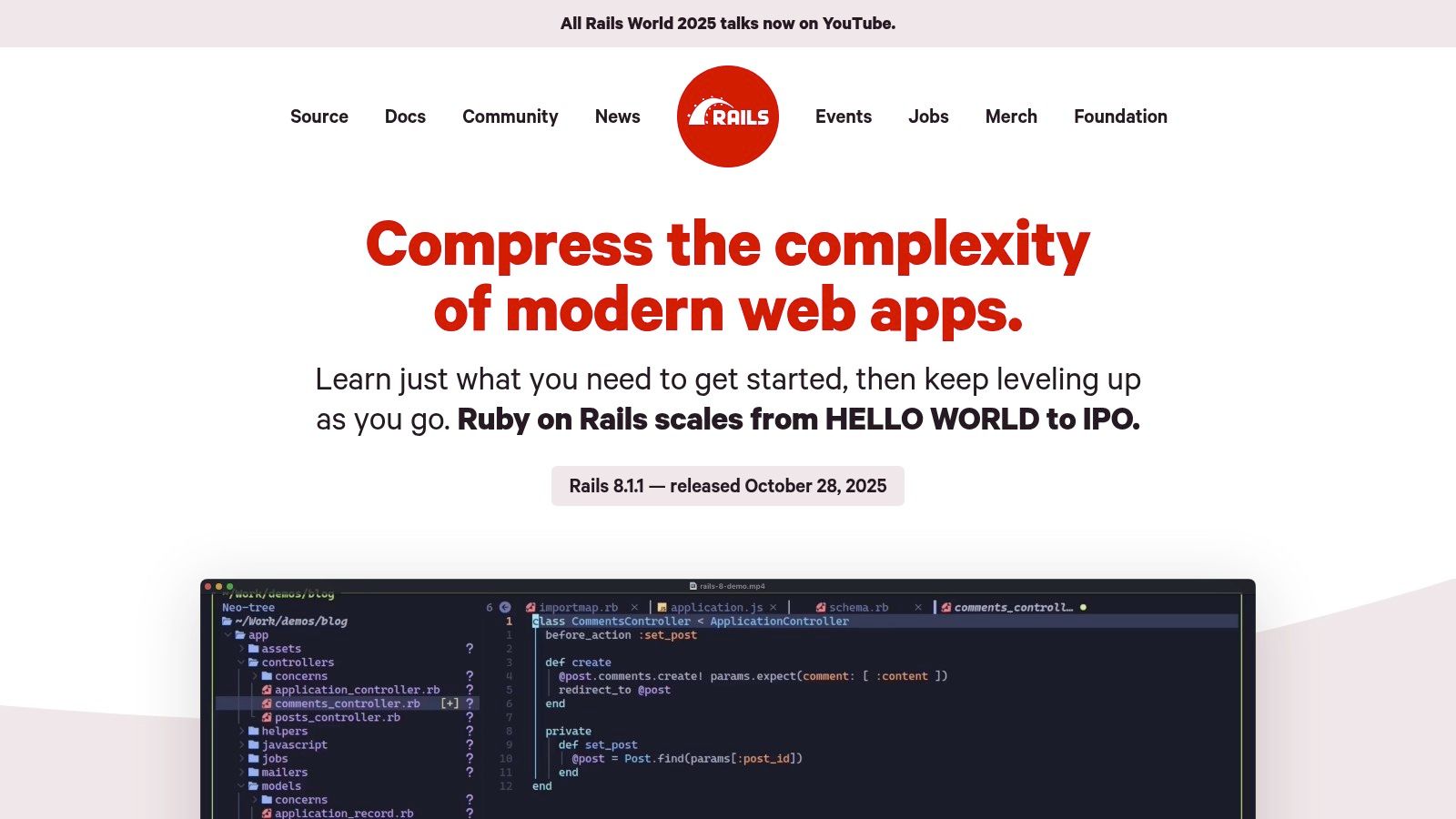
The site’s official guides are its strongest asset, covering everything from Active Record for database interaction to Action Mailer for handling emails. Unlike resources that only cover a single part of the stack, rubyonrails.org explains how to build a cohesive application with integrated tooling like background jobs and WebSockets. This holistic approach makes it one of the best web frameworks for teams needing to build complex features quickly without getting lost in configuration.
Navigating Rails for Your Migration
A significant advantage for founders is that Rails provides a complete backend solution out of the box. The documentation clearly lays out its "batteries-included" philosophy, which means you spend less time choosing and integrating libraries for common tasks like database migrations, asset compilation, and security.
Key Features & Insights:
- Integrated Tooling: The guides provide in-depth tutorials on built-in features like Active Job, Action Cable (WebSockets), and Active Storage for file uploads.
- Convention-Over-Configuration: The docs explain the "Rails way," which streamlines development by establishing sensible defaults and patterns.
- Rapid Development: Its scaffolding tools and cohesive structure enable teams to build and launch MVPs and full-scale products exceptionally fast.
The primary "con" is that its opinionated nature can be restrictive if your application has a highly unconventional architecture. For a successful migration, start with the "Getting Started with Rails" guide to embrace its conventions, then explore the specific guides for features like payments or user authentication.
Website: https://rubyonrails.org/
8. Laravel
Laravel is a popular PHP framework renowned for its elegant syntax and a development philosophy that prioritizes developer happiness. Its official website, laravel.com, is the central hub for its extensive ecosystem, offering comprehensive documentation and direct access to first-party services. For founders moving away from closed-source platforms, this site provides a clear pathway to building robust, full-stack applications with an open-source, battle-tested technology.
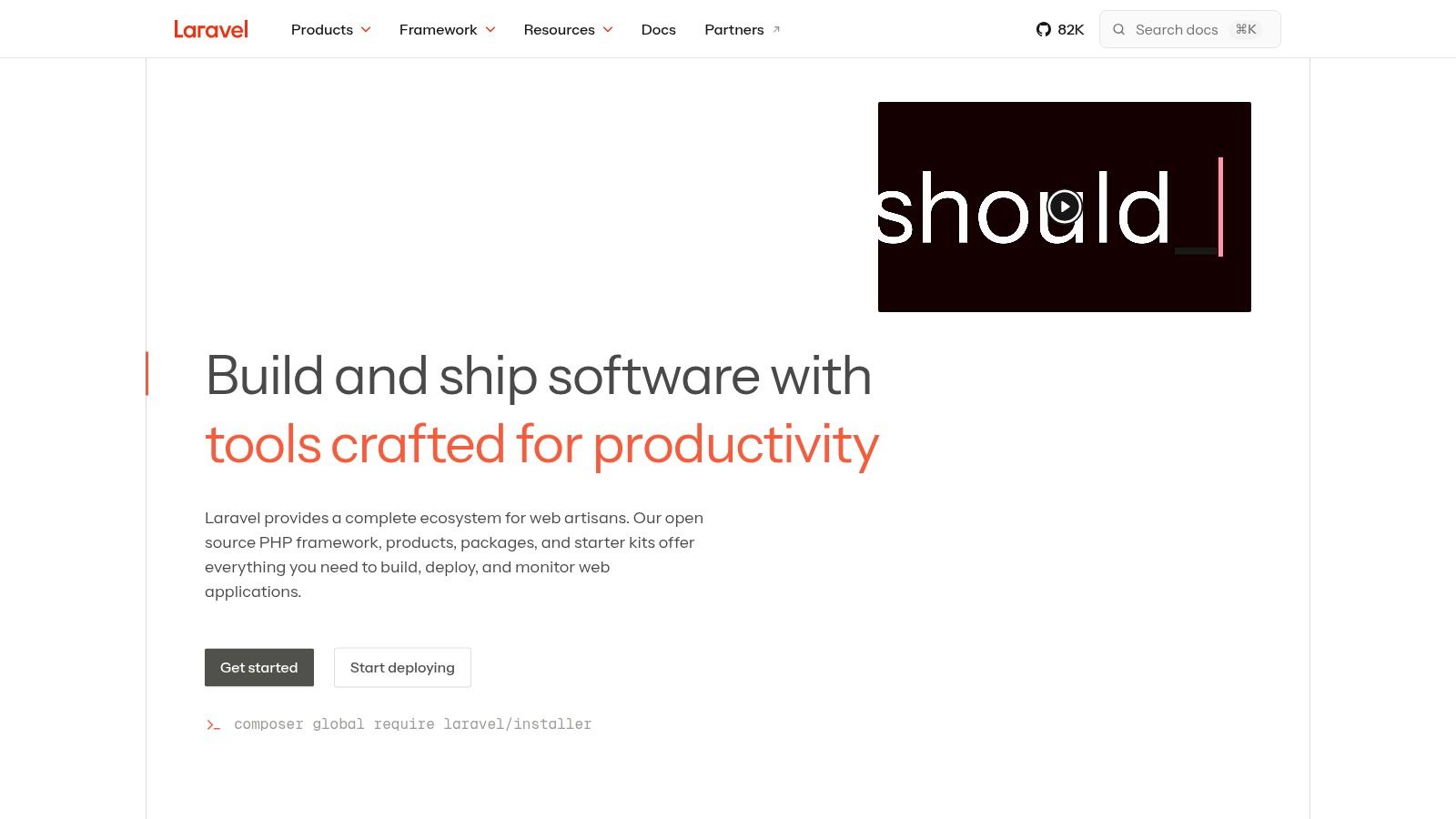
The website excels at onboarding developers through meticulously crafted documentation covering everything from its powerful "Artisan" command-line tool to its intuitive "Blade" templating engine. It clearly outlines how to implement complex features like authentication, database migrations, and job queues, which are often pain points when migrating from no-code tools. This makes it an invaluable resource for teams looking for one of the best web frameworks with a strong foundation in PHP.
Navigating Laravel for Your Migration
A key advantage for startups is Laravel’s integrated ecosystem, a concept familiar to no-code users. The official site links directly to first-party services like Forge for server provisioning and Vapor for serverless deployment, simplifying infrastructure management. This "all-in-one" feel reduces the cognitive load of stitching together disparate services, a common hurdle in code migrations.
Key Features & Insights:
- Integrated Ecosystem: The site is a portal to first-party tools like Forge (deployment) and Nova (admin panels), offering a cohesive experience.
- Rich Documentation: The docs are beginner-friendly and thorough, with clear examples for core features like routing, Eloquent ORM, and Blade templates.
- Clear Release Cadence: Laravel provides transparent LTS (Long Term Support) and security windows, ensuring stability for long-term projects.
The main drawback is that it is fundamentally a PHP framework, so your team must be comfortable with the language and its specific hosting requirements. To get started, focus on the "Get Started" guide, then explore the "Ecosystem" page to understand how its first-party tools can accelerate your migration from a fragmented no-code stack.
Website: https://laravel.com/
9. FastAPI
FastAPI is a modern, high-performance Python web framework for building APIs. Its official documentation site, fastapi.tiangolo.com, is a masterclass in clarity and practicality, making it an exceptional resource for teams needing to build a robust backend. For founders coming from platforms where business logic is tied to visual workflows, FastAPI introduces a code-first, API-centric approach that’s both scalable and easy to learn. The documentation is the definitive guide, written by the framework's creator.
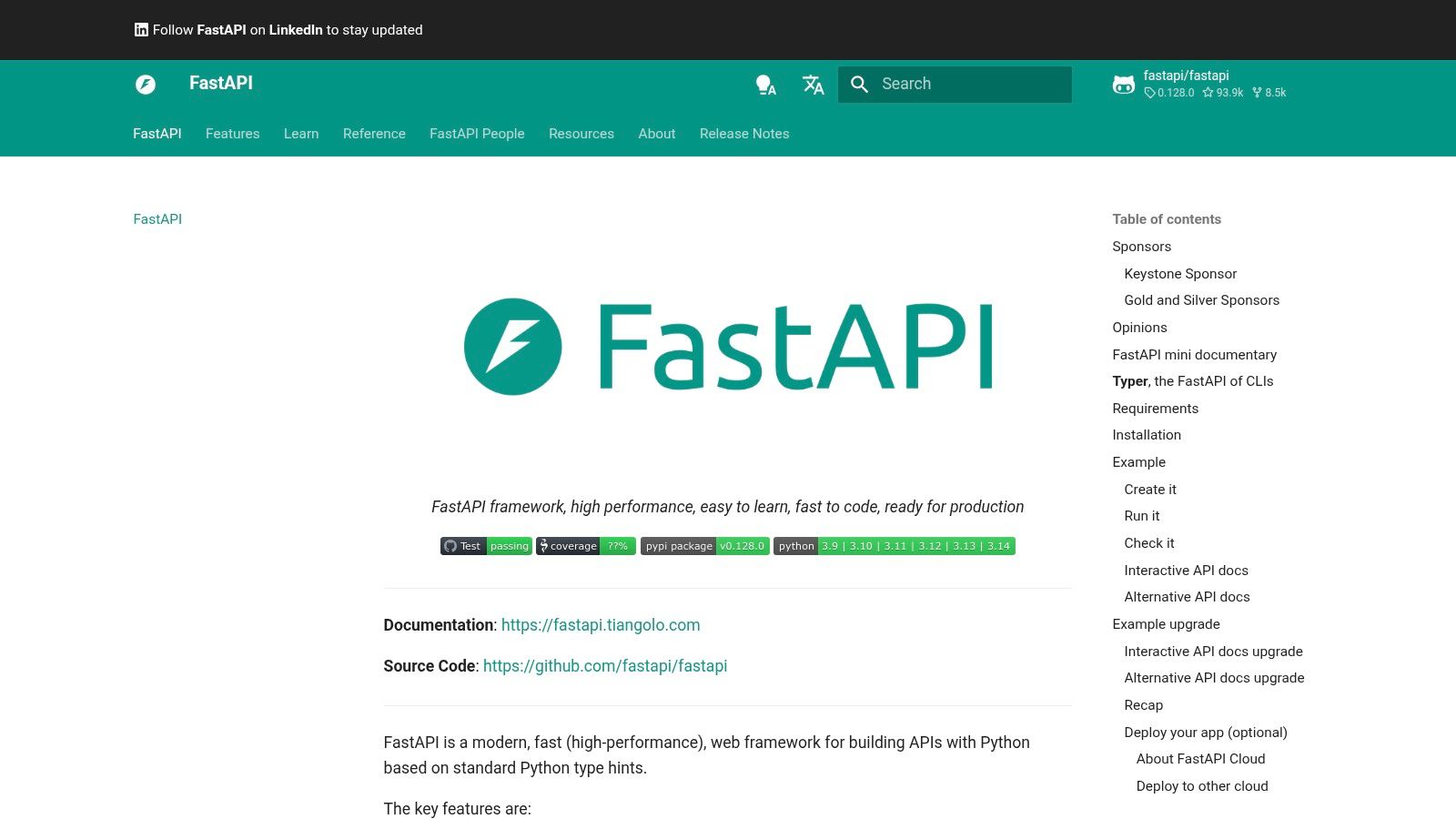
The site's tutorial is its strongest asset, walking you through building a complete API from scratch with copy-paste-ready examples. It brilliantly explains how Python type hints are used not just for code clarity but for automatic data validation and API documentation generation. This focus on developer experience makes it one of the best web frameworks for teams that need to move quickly without sacrificing quality.
Navigating FastAPI for Your Migration
A critical shift for founders is understanding that FastAPI is intentionally unopinionated about frontends and databases. The documentation focuses purely on the API layer, which means you must pair it with a frontend framework like React or Vue and a database like PostgreSQL. This modularity is a strength, but requires more architectural decisions than an all-in-one no-code tool.
Key Features & Insights:
- Automatic Interactive Docs: Every API you build gets interactive Swagger UI and ReDoc pages automatically, which is invaluable for testing and frontend integration.
- Type-Driven Development: The use of Pydantic models ensures your data is validated correctly, reducing bugs and improving reliability.
- High Performance: Built on Starlette and ASGI, it offers performance comparable to NodeJS and Go, which is a major advantage for Python developers.
The main "con" is its API-first nature; you won't find built-in tools for rendering HTML templates. To succeed, start with the main tutorial, then explore the "Advanced User Guide" for patterns on connecting to a database and managing application structure. This will prepare you to build a powerful backend for your custom frontend.
Website: https://fastapi.tiangolo.com/
10. Flask
Flask is a Python micro-framework designed for getting started quickly and scaling with complexity. Its official documentation, hosted by Pallets Projects, is the essential resource for founders moving from the structured environment of no-code to the flexibility of Python. It presents a minimal core, allowing you to build simple APIs or full-featured web applications by adding components as needed, which is a perfect middle-ground for teams that find all-in-one frameworks too restrictive.
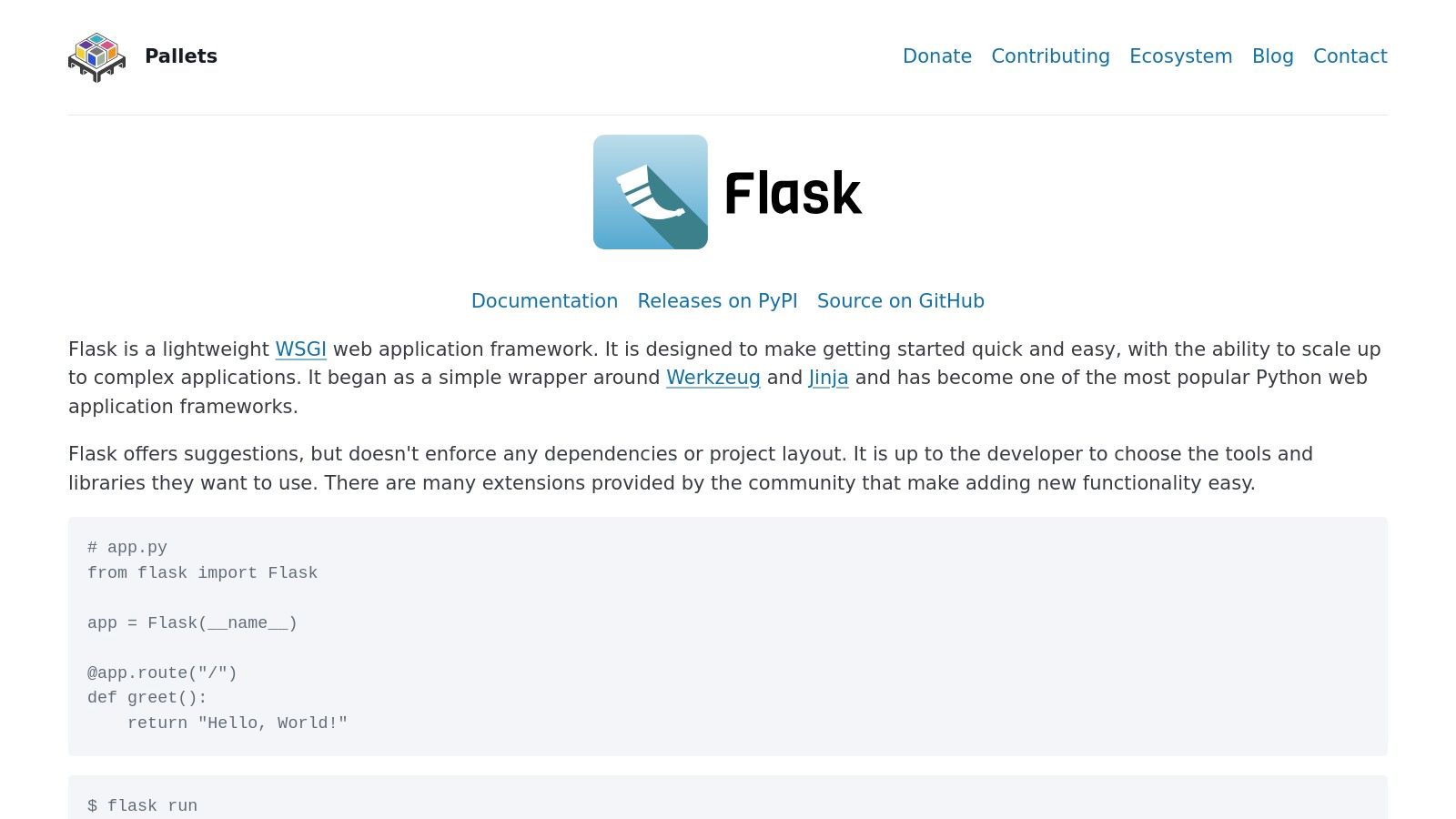
The website's tutorial guides you from a basic "Hello, World!" application to more complex structures involving templates and blueprints. This incremental approach is highly beneficial for developers new to backend engineering. It demonstrates how Flask's unopinionated nature makes it one of the best web frameworks for building custom solutions, from simple microservices that replace Zapier automations to prototypes for new product features.
Navigating Flask for Your Migration
The biggest shift from no-code is that Flask doesn’t include "batteries" like an ORM or user authentication out of the box. The documentation addresses this by guiding you through its extensive ecosystem of extensions. This empowers you to pick the specific tools you need, such as SQLAlchemy for database interactions, without being locked into a framework's default choices.
Key Features & Insights:
- Minimalist Core: The documentation clearly outlines the small API surface, making it easy to learn quickly for rapid prototyping.
- Extensive Ecosystem: It provides patterns for integrating community-driven extensions for everything from database management to security.
- Flexible and Unopinionated: The guides show how to structure your project your way, avoiding the rigid conventions of larger frameworks.
The primary "con" is that this flexibility means you are responsible for more architectural decisions. To start effectively, follow the "Tutorial" section to build a small application, then browse the "Patterns" section to see how to solve common problems like database connections and application factoring.
Website: https://palletsprojects.com/p/flask
11. ASP.NET Core
ASP.NET Core is Microsoft’s open-source, cross-platform framework for building modern web applications with C#. Its official website is an authoritative resource hub, offering comprehensive documentation for its various programming models like MVC, Razor Pages, Blazor, and Web APIs. For founders moving from no-code platforms, this site provides a structured path into an enterprise-grade ecosystem, demonstrating how to build high-performance, secure, and scalable backends. It is maintained by Microsoft, ensuring all guides and benchmarks are current and reliable.
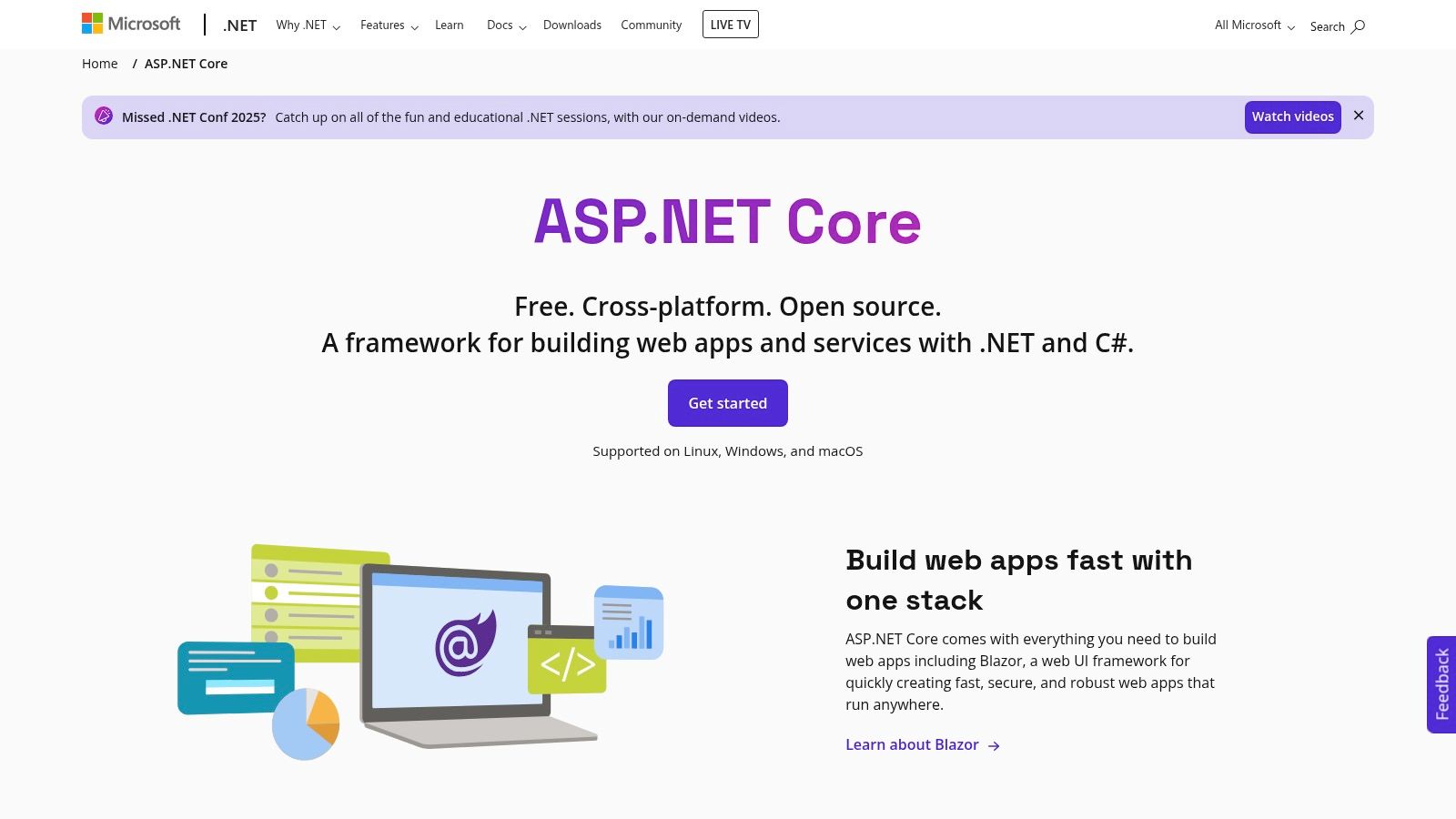
The site’s tutorials and quick starts are excellent for understanding how to build everything from simple web pages to complex real-time applications. It clearly outlines the framework’s strengths in performance and security, making it a compelling choice for teams that require robust, long-term solutions. By presenting multiple development patterns, the site helps you select the right tool for the job, positioning ASP.NET Core as one of the best web frameworks for mission-critical systems.
Navigating ASP.NET Core for Your Migration
A significant advantage for founders is the framework's integrated approach to security, including built-in authentication and threat mitigation. The documentation directly addresses these critical concerns, which are often handled by third-party services in other ecosystems. This all-in-one feel can simplify the transition from a managed no-code environment.
Key Features & Insights:
- Cross-Platform Runtime: The site details how to deploy applications on Windows, macOS, and Linux, offering flexibility for hosting.
- Performance Benchmarks: It provides official performance data, giving you concrete evidence of its speed and efficiency for high-traffic apps.
- Enterprise-Grade Tooling: The documentation is deeply integrated with Visual Studio and VS Code, with guides that smooth out the development workflow.
The main drawback is that it requires familiarity with the .NET runtime and hosting environment, which has a steeper learning curve than script-based languages. Additionally, some enterprise workflows remain more streamlined on Windows. To start, focus on the "Web API" tutorials to build a backend for your frontend framework.
Website: https://dotnet.microsoft.com/en-us/apps/aspnet
12. Spring Boot
Spring Boot is an opinionated framework for building production-grade, standalone Java applications with minimal fuss. Its official project site, spring.io, serves as the central hub for documentation, guides, and its powerful Initializr tool, which bootstraps projects in seconds. For founders scaling beyond no-code platforms into enterprise-grade systems or complex microservices, this site provides a direct path to one of the most robust and widely adopted ecosystems in software development.
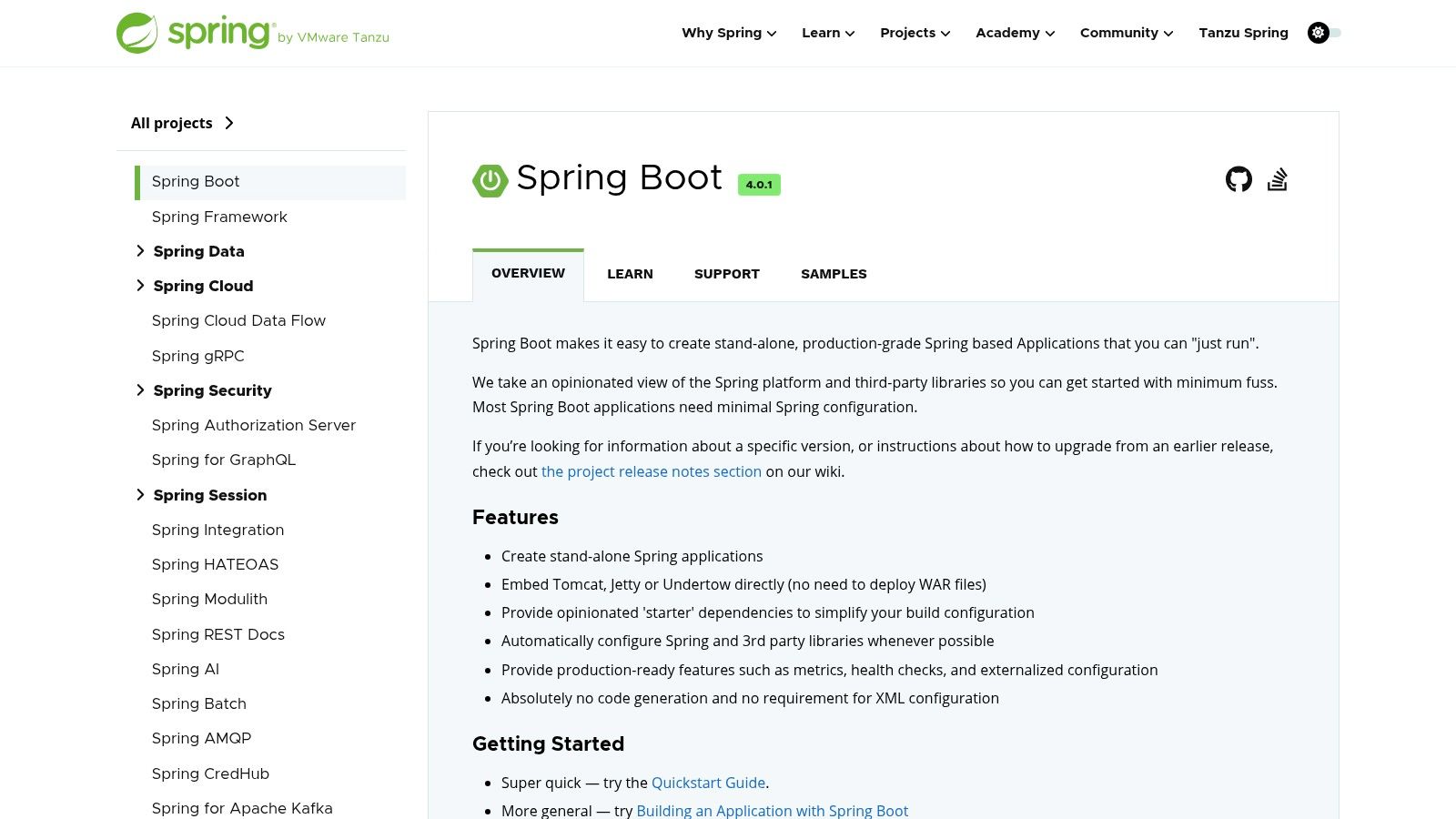
The website excels by offering dozens of targeted guides that solve specific problems, from building a RESTful web service to securing it with enterprise-grade protocols. This practical, problem-oriented approach is ideal for teams needing to implement features like secure authentication or complex data logic that were previously handled by no-code abstractions. This makes it one of the best web frameworks for building scalable, secure backends.
Navigating Spring Boot for Your Migration
For founders accustomed to all-in-one solutions, Spring Boot’s modularity can be a significant shift. The website addresses this by organizing its vast ecosystem into clear projects like Spring Data for database access and Spring Security for authentication. The key is to start with the Initializr to generate a project with only the necessary "starters," avoiding unnecessary complexity. For instance, the Spring Security starter provides a solid foundation, which you can learn more about by reviewing these security best practices for web applications.
Key Features & Insights:
- Project Initializr: The web-based tool allows you to select dependencies visually, generating a ready-to-code project.
- Auto-Configuration: It automatically configures your application based on the dependencies you add, drastically reducing boilerplate code.
- Embedded Servers: Applications are packaged as self-contained JAR files with embedded servers like Tomcat, simplifying deployment.
The main "con" is that the underlying Java and Spring ecosystem has a steeper learning curve than scripting languages. To mitigate this, focus on the "Guides" section for specific use cases rather than trying to learn the entire framework at once. This task-based learning approach makes the transition from no-code to a powerful Java backend far more manageable.
Website: https://spring.io/projects/spring-boot
Top 12 Web Frameworks Comparison
| Technology | Core strength | Dev experience & learning curve | Production readiness & scalability | Best fit / target audience | Key trade-offs |
|---|---|---|---|---|---|
| React | Component-based UI library, canonical patterns | Strong docs, moderate–high learning curve for beginners | Mature ecosystem; needs chosen routing/data stack for full apps | Front-end teams, custom UIs, migrations from no-code | View-only; you must assemble routing/state/tools |
| Next.js | Full‑stack React framework (SSR/SSG/PPR) | Excellent DX, batteries‑included for React | First‑party performance features, enterprise templates, frequent releases | Startups scaling React apps, teams wanting full‑stack React | Fast pace of change; tightly React‑coupled |
| Angular | Opinionated TypeScript framework with CLI/tools | Steep learning curve, powerful CLI & schematics | Enterprise-grade, LTS guidance, built-in SSR/i18n | Large teams, long‑term supported projects | Prescriptive patterns; heavier migrations |
| Vue.js | Progressive framework, approachable API | Gentle learning curve, clear docs | Flexible production use with official router/state | Small–medium teams, progressive adoption from no-code | Advanced patterns vary; smaller enterprise footprint |
| Svelte / SvelteKit | Compiler-based, tiny bundles, compile-time reactivity | Exceptional ergonomics, interactive tutorial/playground | Very fast runtime and small bundles; SvelteKit for full‑stack | Performance-sensitive apps, fast prototypes | Smaller ecosystem; rapid evolution to track |
| Django | Batteries‑included Python web framework | Fast backend development, mature docs | Secure defaults, ORM, admin, proven at scale | Startups needing quick, secure backends; Python teams | Monolithic feel; template-first can be prescriptive |
| Ruby on Rails | Convention-over-configuration full-stack MVC | Very productive, strong conventions | Scales well; rich built‑ins (jobs, mailers, Hotwire) | Rapid MVP→scale, product teams valuing speed | Smaller Ruby talent pool; opinionated structure |
| Laravel | PHP framework with first‑party services | Productive DX, large community & tutorials | Good tooling and deployment services (Forge/Vapor) | Teams in PHP ecosystem, fast feature delivery | PHP runtime trade-offs; Laravel‑centric patterns |
| FastAPI | High-performance, type‑driven Python API framework | Excellent DX, type hints & auto docs (Swagger) | Very fast for APIs; add front-end separately | API-first apps, microservices, ML endpoints | Younger ecosystem; not opinionated for full‑stack |
| Flask | Minimal Python microframework | Very small surface area, easy to prototype | Flexible in production but requires assembling components | Microservices, prototypes, experienced engineers | No built‑ins (ORM/auth); more assembly required |
| ASP.NET Core | Enterprise .NET web stack (C#) | Strong tooling (Visual Studio/VS Code), .NET knowledge needed | High performance, cross‑platform, enterprise support | Enterprise teams, high‑throughput apps on .NET | Requires .NET hosting/runtime familiarity |
| Spring Boot | Opinionated Java framework for production apps | Mature ecosystem, Initializr bootstrapping | Auto‑config, Actuator for ops, suited for microservices | Java shops, enterprise microservices | JVM memory footprint; abstraction complexity |
Making the Final Call: Your Framework Decision Matrix
Choosing from the best web frameworks is a pivotal decision that will shape your product's future, your hiring plans, and your ability to scale. There is no single "best" choice, only the one that best fits your unique situation. This guide has equipped you with the critical factors to consider, from performance and scalability to the specific needs of a startup graduating from no-code. Now, it's time to synthesize this information and make your selection with confidence.
Recapping the Core Trade-Offs
We've explored a wide spectrum of tools, from the frontend dominance of Next.js and SvelteKit to the backend powerhouses like Django, Ruby on Rails, and FastAPI. Each represents a different philosophy. Frameworks like Django and Rails offer an "all-inclusive resort" experience with their batteries-included approach, which can be a massive accelerator for founders migrating from the contained ecosystems of Bubble or Webflow. They handle the ORM, admin panels, and authentication out of the box, reducing decision fatigue.
On the other hand, microframeworks like Flask and FastAPI provide a "build-your-own" toolkit. This path offers unparalleled flexibility but demands more technical expertise to assemble and maintain the disparate components. For teams overspending on Zapier and seeking a custom backend, this approach can be perfect for building lean, highly specific APIs to replace that integration sprawl.
For the frontend, the choice between component-based libraries like React and Vue versus a compiler-first framework like Svelte hinges on your team's familiarity with JavaScript and your performance requirements. The rise of meta-frameworks like Next.js and SvelteKit has blurred the lines, offering powerful full-stack capabilities that are particularly well-suited for product leaders who need modern, fast, and SEO-friendly applications.
Your Actionable Decision Framework
To move from analysis to action, use the following matrix as your final filter. Ask yourself and your team these critical questions:
- Speed vs. Control: Do you need to build and ship an MVP replacement as quickly as possible? A highly opinionated framework like Ruby on Rails or Django is your best bet. Do you require granular control over every component and dependency for a unique application? A more flexible option like FastAPI paired with React will serve you better.
- Team Skills & Hiring Pool: What does your current or future team know? The JavaScript ecosystem (React, Next.js, Vue.js) boasts the largest talent pool, making it easier to hire. Python (Django, FastAPI) is a close second, especially for data-intensive applications. Niches like Ruby or Elixir have passionate communities but a smaller hiring market.
- Application Type & Complexity: Are you building a content-heavy marketing site that needs top-tier SEO and performance? Next.js or SvelteKit are clear frontrunners. Is your core product a complex, data-driven B2B SaaS platform that requires robust security and a battle-tested architecture? Django, ASP.NET Core, or even Spring Boot provide the enterprise-grade foundation you need.
- Long-Term Vision: Are you building a defensible asset to secure VC funding? Demonstrating ownership of your IP on a mainstream, scalable stack is non-negotiable. Frameworks backed by major corporations like React (Meta), Angular (Google), and ASP.NET Core (Microsoft) offer stability and a clear roadmap, which can be a strong signal to investors.
Making an informed decision now is about more than just picking a technology. It's about laying a solid foundation that supports your business goals, allows you to ship features confidently, and scales as your user base grows. You are moving beyond the limitations of no-code to build a real, defensible asset that unlocks your company's full potential.
If you're looking for a partner to manage this entire transition and deliver a production-grade application, First Radicle specializes in turning fragile no-code projects into scalable, secure software on the best web frameworks. We handle the migration to modern stacks like React, Next.js, and Python with PostgreSQL, giving you 100% IP ownership and a foundation built for growth. Learn more at First Radicle.